Posts

James Michael Curley House in Jamaica Plain, on Boston's Irish Heritage Trail

Image
Photo Courtesy of Emerald Necklace Conservancy One of Boston's most endearing neighborhood landmarks is the James Michael Curley House at 350 The Jamaicaway in Jamaica Plain.  The house belonged to James Michael Curley, himself o ne of the most colorful and legendary politicians to come out of Boston in the 20th century.   Born on November 20, 1874 on Northampton Street in Roxbury to Irish immigrant parents from County Galway, Curley was the dominant figure in Boston and Massachusetts politics for half a century.   In addition to serving four four-year terms as mayor of Boston, in 1914, 1922, 1930 and 1946, he was  Governor of Massachusetts  from 1935-37, and also served as   US Congressman  from 1911-14. In 1915, when he was mayor, Curley had the 21 room mansion built in Georgian Revival architectural style, with a crystal chandelier, Italian marble fireplace, mahogany interior and a three-story spiral staircase.  It sits on 1.2 ac...

Boston's Harold Connolly, World Record Holder and 1956 Olympic Gold Medalist in the Hammer Throw

Image
One of Massachusetts' most notable Olympic champions, Harold Vincent Connolly, died on August 18, 2010 at age 79.  His rise to stardom, from a frail and partially paralyzed child to an Olympian, has inspired generations of Bostonians and athletes around the world. Born in Somerville on August 1, 1931, Connolly was raised in Boston's Brighton neighborhood. He suffered from severe nerve paralysis as a child and spent most of his youth in physical therapy. He compensated for his illness by training diligently with strength conditioning, weight lifting and athletics at Brighton High School, where he graduated in 1949, and later at Boston College, where he graduated in 1953. Connolly set numerous American, world and Olympic records in the hammer throw, and was a four-time Olympian. In 1956, he won the gold medal in the hammer throw at the 1956 Olympics in Melbourne, beating the defending world champion, Mikhail Krivonosov of Russia. Throughout his career, Connolly won nine U.S. ...

Thomas Cass of Massachusetts Irish 9th Regiment, Dies from Civil War Battle Wounds on July 12, 1862

Image
Thomas Cass Memorial, Boston's Public Garden On July 12, 1862, Colonel Thomas Cass, leader of the Irish 9th Regiment Massachusetts, died in Boston from his wounds at the Battle of Malvern Hill. He was buried with military honors at Mount Auburn Cemetery in Cambridge. Born in Farmleigh, County Laois, Ireland in 1821, Thomas Cass emigrated with his family to Boston when he was nine months old, where they settled in the North End. He worked with his father and eventually became successful businessman, and also a prominent member of the Boston School Committee. He lived on North Bennet Street. When the Civil War broke out in 1861, President Abraham Lincoln issued a proclamation calling for 75,000 volunteers to defend the Union. Cass immediately offered to raise a regiment of Massachusetts Irish volunteers to fight for the Union. Governor Andrew commissioned Cass to lead the Fighting Irish 9th, as it was called, and the Regiment was permitted to carry its own Irish flag, which was ...

Boston Songwriter Jimmy McHugh Wrote 500+ Hits for Hollywood During Illustrious Career

Image
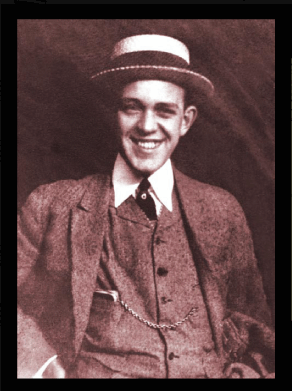
Photo courtesy of JimmyMchughmusic.com Born in Jamaica Plain, songwriter Jimmy McHugh (1894-1969) was hailed as one of Hollywood's top composers.  During his career, McHugh wrote more than 500 hit songs, including, "On the Sunny Side of the Street," "I'm in the Mood for Love," 'Let's Get Lost" and countless other songs that were recorded by the likes of Frank Sinatra, Ella FitzGerald, Billie Holiday and Chet Baker. Born on July 10, 1894, Jimmy's father James was a plumber, and his mother Julia (Collins) was an accomplished pianist who Jimmy credited for his career in music. He grew up in an Irish-American community, part of a neighborhood that included boxer John L. Sullivan and politician James Michael Curley.  In his youth McHugh worked at the Boston Opera House he practiced on the company's pianos and got to met stars like Enrico Caruso.   In 1920, McHugh moved to New York City to work for Irving Berlin and there met lyricist Dorothy ...

Twin Marble Lions in Boston Public Library Part of Boston's Irish Heritage Trail

Image
Photo by BITA One of Boston’s most popular and widely-viewed public art memorials is located in the foyer of the Boston Public Library in Copley Square.       Known locally as the Twin Lions, the amazing monument is a tribute to two Massachusetts Volunteer Infantry regiments - the Second and the Twentieth - that fought bravely in the Civil War.     The lions were carved by master sculptor Louis St. Gaudens (1854-1913) and were commissioned by the surviving members of the two volunteer regiments.  Although St. Gaudens intended to polish the Siena marble before the memorial was unveiled, the regiment members were so delighted with the unpolished, raw look of the statues, that they asked the artist to leave it as is.  Photo by BITA Born in New York City on January 1, 1854, Louis was the son of Bernard Saint-Gaudens from France and Mary McGuinness from Ireland, and he was the brother and protégé of his older brother Augustus Saint Gaud...

On July 2, 1947 Boston Pops Maestro Arthur Fiedler Marks the 75th Anniversary of World Peace Jubilee on the Esplanade

Image
Arthur Fiedler, Courtesy of Digital Commonwealth On July 2, 1947, Boston Pops Conductor Arthur Fiedler and his orchestra held a giant concert on the Charles River Esplanade in celebration of Independence Day. More than 35,000 people attended the free concert.  The concert was celebrated the 75th anniversary of the World Peace Jubilee and International Music Festival held in 1872, led by famed Irish-born impresario Patrick S. Gilmore.  Admission ticket to the World Peace Jubilee, 1872 According to reporter Cyrus Durgin, writing in The Boston Globe, “Mr. Fiedler has asked for people to volunteer as participants in the “Anvil Chorus” from “Il Trovatore” by Verde and in the “Hallelujah Chorus” from Handel’s oratorio, "Messiah." Both these pieces had been on that festival program of 1872.” Fiedler was apparently swamped with hundreds of letters, postcards and phone calls. He selected 38 of the best singers to lead the chorus, along with the rest of the audience.. Coliseum for ...

President Kennedy Makes Triumphant + Emotional Visit to Ireland on June 26-29, 1963

Image
President John F. Kennedy as the President’s motorcade passes through Cork, Ireland. Photo Courtesy of JFK Library President John F. Kennedy's official visit to Ireland on June 26-29, 1963 was considered a high point of his presidency, both for the president himself and for Ireland.     The President’s eight great-grandparents all emigrated to Boston, Massachusetts during the Irish Famine of the late 1840’s, seeking to take advantage of the economic opportunity offered in America. By the end of the century, both of President Kennedy’s grandfathers had become successful Boston politicians. Patrick J. Kennedy was a tavern owner and later a banker who served in both Houses of the Massachusetts Legislature and was the political "boss” of a ward in Boston. John F. ("Honey Fitz") Fitzgerald, a colorful politician who served in the Massachusetts State Senate and the U.S. House of Representatives, was also mayor of Boston for three terms. The visit captured the world’s imag...