Posts

On January 5, 1885, Corkman Hugh O'Brien Becomes Boston's First Irish-Born Mayor

Image
On Monday, January 5, 1885,  Hugh O'Brien  was sworn-in as the city of Boston's first Irish-born Mayor, launching an era of Irish-American dominance of  Boston City Hall  that continued through the 20th century. O'Brien was born in County Cork, Ireland on July 13, 1827, and emigrated with his family to Boston in 1832 when he was five years old.  He was educated in a public school in the Fort Hill neighborhood, and when he was 12 he joined the Boston Courier newspaper as an apprentice.  By the age of 15 he had become foreman of a printing office, before starting his own publication, the Shipping and Commercial List .  He had a successful career as a businessman and gained the respect of city leaders as well as the Irish immigrant community that struggled to gain a foothold in Boston.  O'Brien launched his political career in 1875 on the Board of Alderman, and in 1884 ran against and defeated incumbent Boston Mayor Augustus Martin.  At tha...

Soldiers & Sailors Monument on Boston Common, Cornerstone Placed on September 18th

Image
The City of Boston laid the cornerstone for the   Civil War Sailors and Soldiers Monument   at Flagstaff Hill on Boston Common on Monday, September 18,1871. "The event was celebrated by an imposing public display.  Business was generally suspended, the streets were thronged with people drawn together from all parts of the State to honor the occasion." Among the attendees were Martin Milmore, the Irish-born sculptor who had won the commission to create the monument;  Patrick A. Collins , state senator from South Boston;  General P.R. Guiney  of the Massachusetts 9th Irish Regiment, and Gilmore's Band, led by  Patrick S. Gilmore . The following year Milmore went to Rome, Italy, where he spent the next five years working on the monument.  It was shipped back to Boston and officially unveiled on September 17, 1877. For more information, see  Irish Boston: A Lively Look at Boston's Colorful Irish Past .  For more on Boston's I...

JFK Statue at Massachusetts State House Now Open to the Public

Image
Tourists, school children and local residents are once again able to stand next to the beloved statue of President John F. Kennedy which stands alongside other famous Bostonians on the front lawn of the MassachusettsState House . The 8 foot 2 inch tall bronze depiction of President John F. Kennedy, purposeful and confident in full stride, was created by sculptor Isabel McIlvain of Sherborn,  and unveiled on May 30, 1990.   Nearby are statues of Daniel Webster, Horace Mann and Anne Hutchinson.    This area of the statehouse was closed off on September 11, 2001, and stayed closed due to security reasons.  But recently, government officials agreed to open access to the front law from April through October, from 9:30 a.m. to 4:30 p.m.. The Massachusetts State House has self-guided tour information about State House the building and grounds, which includes numerous statues and plaques that tell the story of the state’s illustrious polit...

Irish Rebels Seize Dublin Post Office in Easter Uprising, 1916

Image
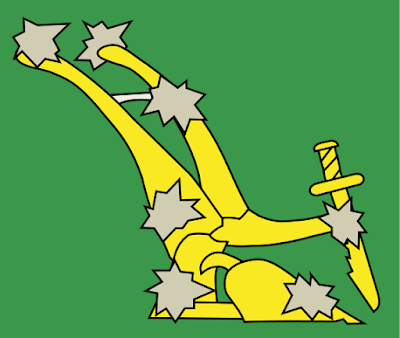
Flag of the Irish Citizens Army On Easter Monday, April 24, 1916, an insurrection against British rule in Ireland took place in the capitol city of Dublin .  Led by a collection of volunteer organizations including the Irish Republican Brotherhood, Sinn Fein, the Irish Volunteers and the Irish Citizens Army, the armed uprising was planned for months in advance.  But the capture of the German ship, the Aud, bringing guns for the rebels meant that “any chance of a successful uprising disappeared,” wrote Irish historian Michael Kenny in The Road to Freedom , published by the National Museum of Ireland. An official British communication, published in The Boston Globe , read: “At noon yesterday serious disturbances broke out in Dublin .  A large party of men identified with the SF party, mostly armed, occupied Stephen’s Green and took possession forcibly of the Postoffice, where they cut the telegraph and telephonic wires.  Houses were also occupied in S...

Boston College Arts Festival Features Gaelic Roots Performers on April 23

Image
Seamus Connolly The 17th annual Boston College Arts Festival , which runs April 23-25, 2015,  kicks off this year with a performance by BC's Gaelic Roots program , run by master fiddler Seamus Connolly.  The performance of Irish music with dancing takes place at O'Neill Plaza on campus, from noon to 12:45 on Thursday, April 23. The three-day festival includes dozens of performances, ranging from music and dance to theater and art exhibits to literary readings and film showings.  Here is a complete 2015 schedule . The Gaelic Roots program was first introduced to Boston College by Seamus Connolly in 1990, and since then it has become one of the most important academic programs for the study of Gaelic music and dance. You can follow Gaelic Roots on Facebook . Find year round information on Irish cultural activities in greater Boston at IrishBoston.org .

Johnny Kelley - One of the Boston Marathon Greats

Image
Photo Courtesy of Boston Public Library The 119th annual Boston Marathon  takes place on Monday, April 20, 2015, a good time to reflect on John Adelbert  Kelley, considered by many to be the quintessential amateur runner who exemplifies the spirit of the Boston Marathon.   Kelley ran his first marathons in 1928 and 1932 but did not finish either race.  He ran again in 1933 and then competed in every single race through 1992!  He finished in the top 10 eighteen times, taking first place in 1935 and again in 1945.  He owns the record for the most races started (61) and the most finished (58).  His best time was two hours and thirty minutes, posted in 1943.  He was 84 when he ran his last race in 1992, posting a time of five hours and fifty-eight minutes. He was christened Johnny "The Elder" Kelley, when John J. Kelley (no relation) emerged as a champion in the 1950s, winning the race in 1957.  Kelley was born in 1907 in ...

April 18, 1949: 26 Counties of Ireland Officially became the Republic of Ireland, Despite deValera Objection

Image
Éamon de Valera, who served as  Ireland ’s prime minister from 1933 through 1948, had remained forceful in calling for the unification of  Ireland  and for breaking away from the  British Commonwealth . De Valera toured the US in March 1948, rallying Americans to help Ireland get rid of partition.  In Boston he said, "If people around the world would make it clear that partition cannot be, it would disappear."  In December 1948  the Irish Parliament passed the  Republic  of  Ireland Act , in tandem with the British Nationality Act, declaring that “People born in Eire in the future will be  Eire  subjects and not British subjects.”   On Monday, April 18, 1949,  Ireland  officially became the  Republic  of  Ireland  and severed its ties to the  British Commonwealth .  But the six counties known as Northern Ireland opted to remain part of Great Britain.  In Du...